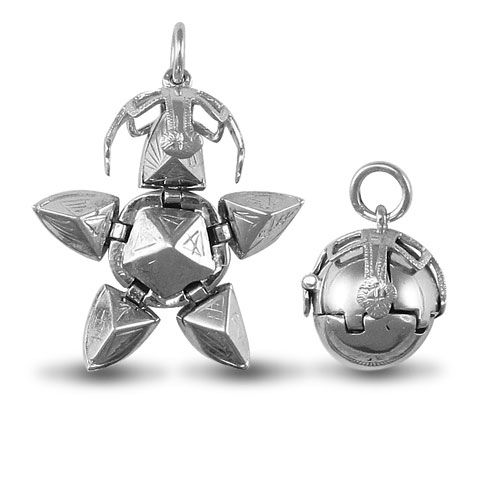
A Masonic ball pendant is one of the most distinctive forms of symbolic jewellery. Closed, it can look like a compact sphere or orb. In many traditional designs, hinged sections unfold into a cross-like form decorated with Masonic symbols.
That combination of discreet shape, mechanical detail and symbolic decoration is why Masonic balls are also described as Masonic orbs, cross fobs or folding pendants. This guide explains the design and the practical details to consider when choosing one.
What is a Masonic ball pendant?
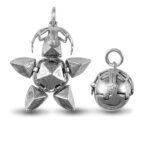
A traditional Masonic ball is formed from hinged segments that fold together into a small orb. When opened, the segments may form a cross-like arrangement, often with engraved or raised symbols on the inner faces. Historically, similar pieces could be worn as watch fobs, charms or pendants.
Not every modern piece opens in exactly the same way. Some are detailed solid pendants inspired by the traditional form, while others use a folding mechanism. Always review the individual product photographs and description to understand the construction.
What does a Masonic ball represent?
Masonic jewellery commonly uses architectural tools and other emblems associated with Freemasonry. The exact combination and interpretation can vary by period, maker, lodge tradition and the symbols used on the piece. For that reason, it is better to treat the decoration as specific to the individual pendant rather than assume every Masonic ball carries one universal meaning.
For many owners, the appeal is personal: the jewellery may express affiliation, commemorate a milestone, continue a family connection or simply preserve an intricate historic style.
Why does the pendant open into a cross-like shape?
The folding construction is part of the object’s character. Multiple small pyramid-like or wedge-shaped sections can be joined with hinges so that they close into an orb and open into a cross-like arrangement. This gives the pendant two visual identities: understated when closed and detailed when opened.
Because the hinges are small, an opening pendant should be handled carefully. Support the sections as they unfold, avoid pulling them beyond their natural range and never force a stiff joint.
What to check before choosing a Masonic ball
1. Material
Check whether the pendant is sterling silver, gold, gold-plated or a mixed-metal design. Our current Masonic pendant collection includes pieces made in 925 sterling silver.
2. Opening or solid construction
Look closely at the images and product details. If the ability to open is important to you, confirm it before buying rather than relying on the name alone.
3. Size and weight
A detailed orb can be heavier than a flat pendant of similar width. Check the dimensions and weight where listed, and choose a chain appropriate for the pendant.
4. Bail and chain compatibility
The chain’s end fitting must pass through the bail. A stronger chain is generally more suitable for a substantial pendant, but the best width depends on the bail and the look you prefer.
5. Symbol detail
Compare the engraving, relief and internal arrangement. On an opening design, photographs of both the closed and open pendant are particularly useful.
How to style a Masonic ball pendant
A plain chain keeps attention on the pendant’s form and detail. Sterling silver creates a consistent tonal look, while a darker or oxidised finish can emphasise engraved lines. The chain length changes how the piece reads: shorter lengths keep it near the neckline, while a longer chain gives a traditional fob-inspired effect.
For a contemporary sterling-silver option, view the Sterling Silver Masonic Ball Pendant. You can also compare the other designs in our Masonic collection.
Care and handling
- Open hinged sections slowly and with clean, dry hands.
- Do not pull, twist or flatten the sections beyond their intended movement.
- Keep the pendant away from chlorine, perfumes and household cleaning products.
- Store it closed in a soft pouch to protect the hinges and surface.
- Use a soft silver-polishing cloth, avoiding heavy pressure around hinges.
- If a hinge becomes loose or stiff, ask a jeweller to inspect it.
Frequently asked questions
Is a Masonic ball the same as a Masonic orb?
The terms are often used for the same style of spherical Masonic pendant or fob, particularly the traditional hinged design.
Do all Masonic balls open?
No. Traditional examples often unfold, but some modern pendants are solid or use a different construction. Check the specific listing.
Can it be worn every day?
It can be worn regularly if the chain and bail are suitable, but an intricate hinged piece benefits from careful handling and separate storage.
Explore the details: browse our sterling-silver Masonic pendants and compare the product images, dimensions and construction before choosing.